Building a new way for groups to move, plan, and stay connected
Building a new way for groups to move, plan, and stay connected
Client
Client
United Airlines
United Airlines
Project Type
Project Type
Design and Innovation
Design and Innovation
My Role
My Role
UX Designer & Researcher
UX Designer & Researcher
Duration
Duration
Aug 2024 - Dec 2024
Aug 2024 - Dec 2024
Boarding as a group creates attentional overload for families and gate agents
Boarding as a group creates attentional overload for families and gate agents
Group boarding places high pressure on both families and gate agents simultaneously mapping both journeys revealed exactly where coordination breaks down.

Passengers
Passengers
Juggling bags, children and boarding passes simultaneously
Passengers feel stressed about delaying others in the boarding line
Juggling bags, children and boarding passes simultaneously
Passengers feel stressed about delaying others in the boarding line
"We have no issue with the boarding process. The only challenge boarding with 3 children is the unspoken pressure of others in the line wanting you to hurry up."
"We have no issue with the boarding process. The only challenge boarding with 3 children is the unspoken pressure of others in the line wanting you to hurry up."
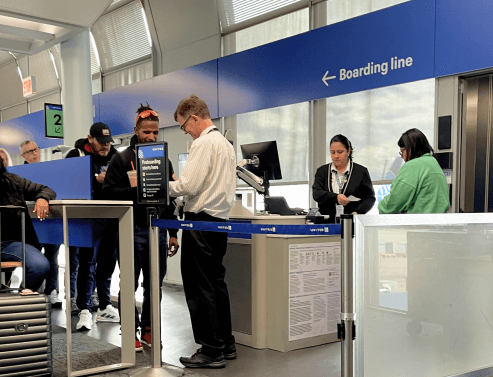
Gate Agents
Gate Agents
Frequent task switching
Duplicate scans and manual verification
There is constant time pressure to keep boarding on schedule
Frequent task switching
Duplicate scans and manual verification
There is constant time pressure to keep boarding on schedule
"I have to verify and match as you board, they will hand me boarding passes for John Doe while Jane Doe is boarding. We get duplicate scans like that all the time!"
"I have to verify and match as you board, they will hand me boarding passes for John Doe while Jane Doe is boarding. We get duplicate scans like that all the time!"
Group boarding represents a missed opportunity to improve experiences at scale
Each year, millions of families and groups travel together, forming a major portion of United Airlines' customer base.
From January to August 2024 alone, United Airlines recorded over 20 million unique bookings, with 50% involving 2+ passengers, across both domestic (20%) and international (32%) routes
Research revealed three types of groups most impacted by group boarding complexity each managing dependents, reduced mobility, or both
Designed to adapt when plans change
Not every group boarding goes as planned, and that's okay. Managing real-life changes like cancellations or no-shows is now fast, flexible, and fully user-led.
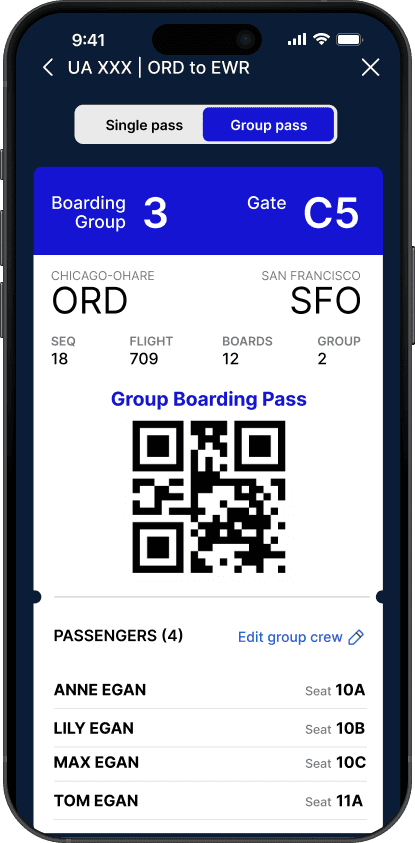
1.Edit group pass
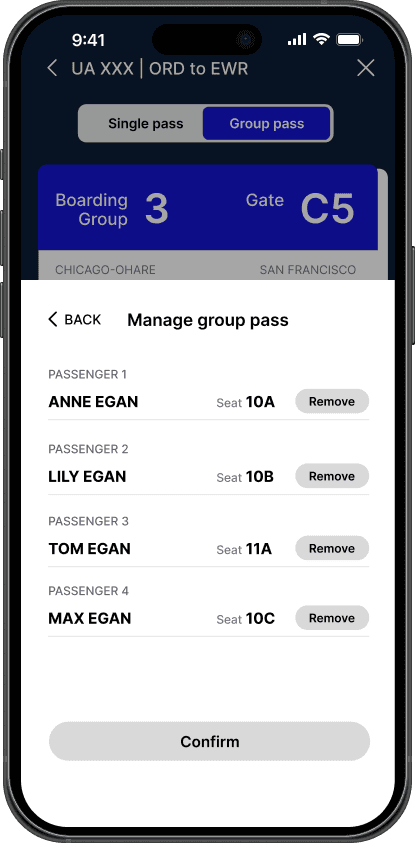
2.Remove Person
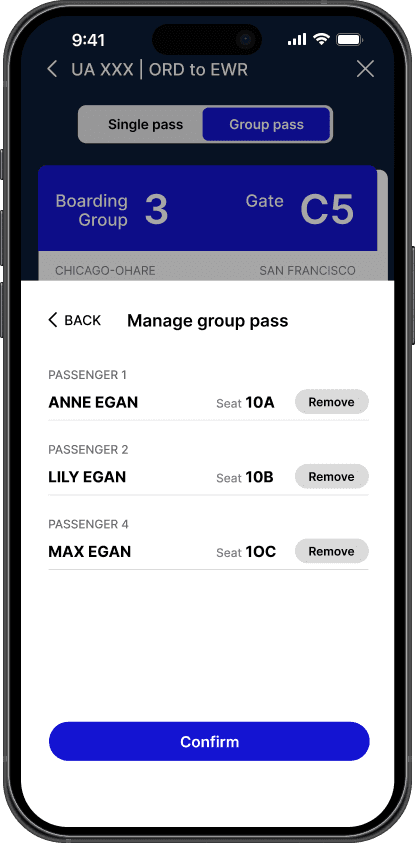
3.Confirm the updated pass
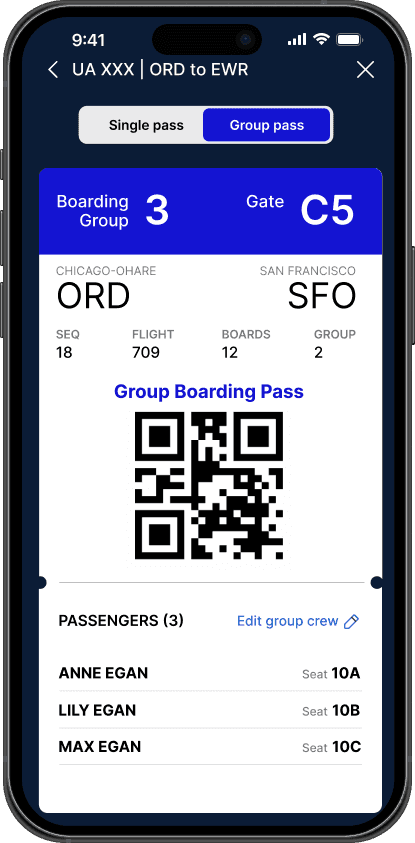
4.Receive a new group pass
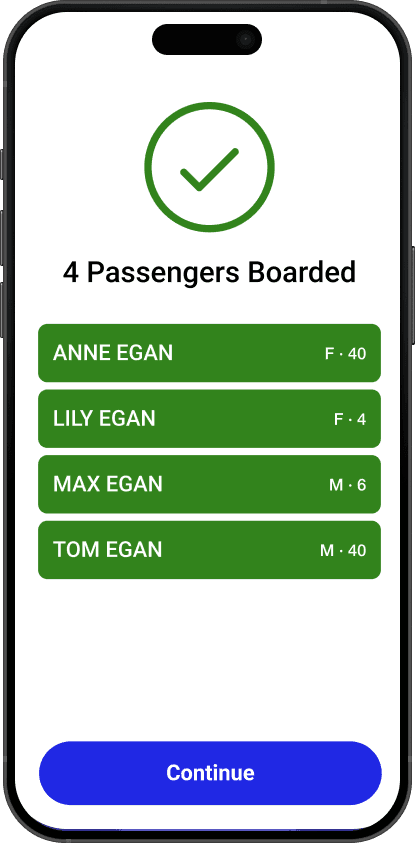
A moment of clarity, built into every scan
Intentional confirmation
Encourages active passenger engagement
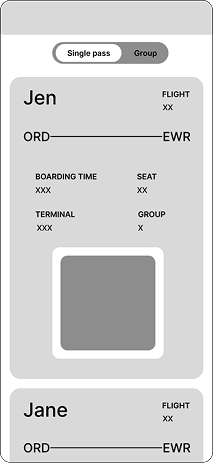
Concept 1 : Passenger Group Pass
Pro: New feature consolidates both boarding passes in one convenient location.
Con: Users need time to become familiar with the new functionality.
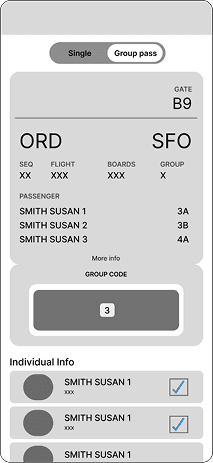
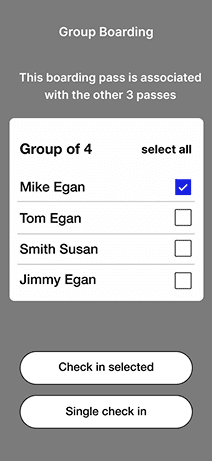
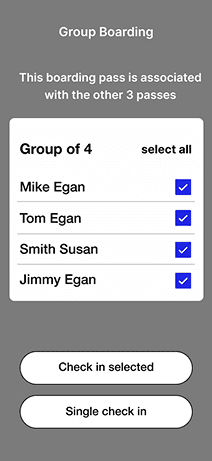
Concept 2 : Agent Scanner Designed for Group Boarding passes
Pro: Aligns with the immediate client priorities for operational improvement and requires minimal technical changes.
Con: Adds a manual check-off task for gate agents (secondary/front-stage stakeholders), increasing their workload, though it helps reduce errors, highlighting a trade-off between staff effort and improved operational reliability.
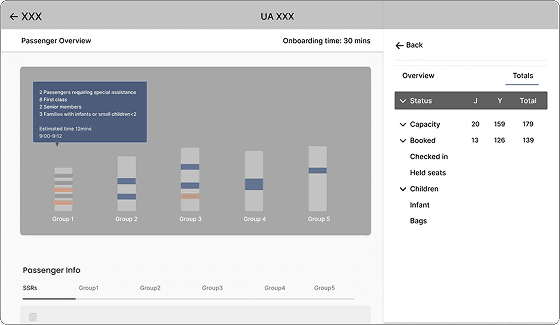
Concept 3 : Flight visualization for better efficiency
Pro: Valuable for long-term transformation.
Con: Requires broader system changes and longer implementation timelines.
We moved forward with Concepts 1 and 2, as their scanning mechanisms offered practical, implementable foundations for future development. High-fidelity prototypes aligned with United Airlines’ design language and adhered to WCAG2 .1 AA accessibility standards to ensure inclusive experiences.
We moved forward with Concepts 1 and 2, as their scanning mechanisms offered practical, implementable foundations for future development. High-fidelity prototypes aligned with United Airlines’ design language and adhered to WCAG2 .1 AA accessibility standards to ensure inclusive experiences.
Usability issues stemmed from context rather than concept
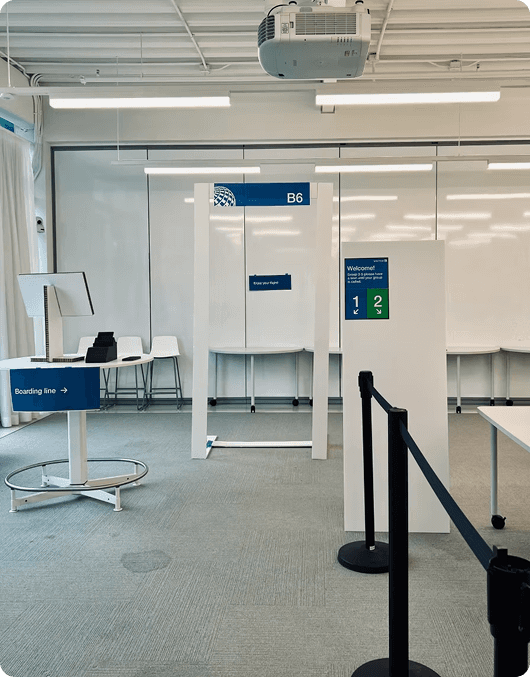
We tested the single-group boarding pass concept through a comprehensive 45-minute simulation involving 18 participants, complemented by usability testing. Our mock airport environment allowed us to directly compare the existing process (Test A) with our proposed solution (Test B), measuring effectiveness, passenger behavior patterns, and optimal group size.
Test A
Controlled test reflecting the current boarding process.
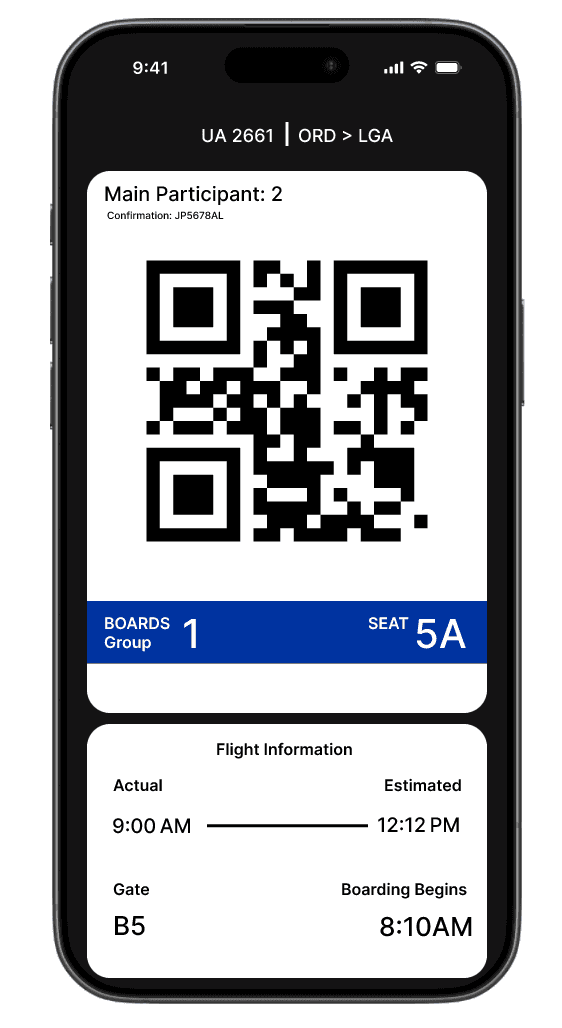
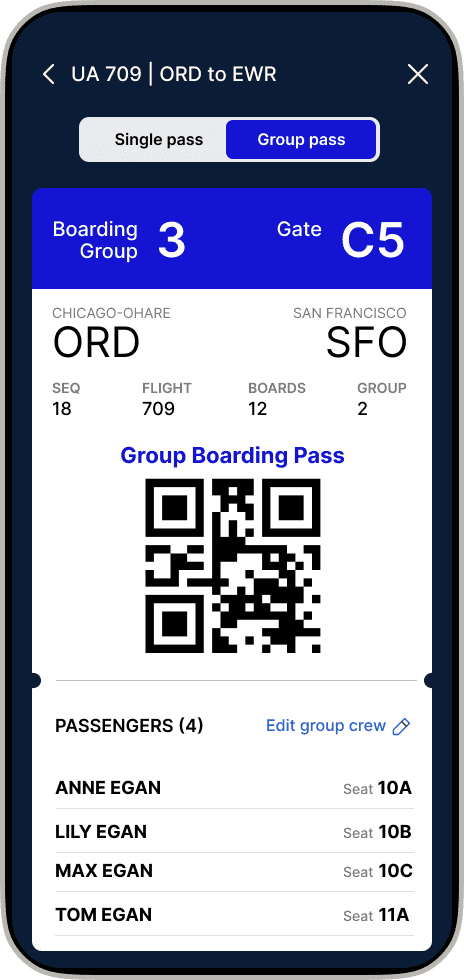
Test B
Solution test using the proposed single-group pass.



Operational Impact
Single group boarding passes reduced group boarding time by 46%.

Fail-Safe Approach
Group boarding requires a fallback when groups split unexpectedly.

Group Pass Limit
Boarding efficiency drops beyond a <5 group size.
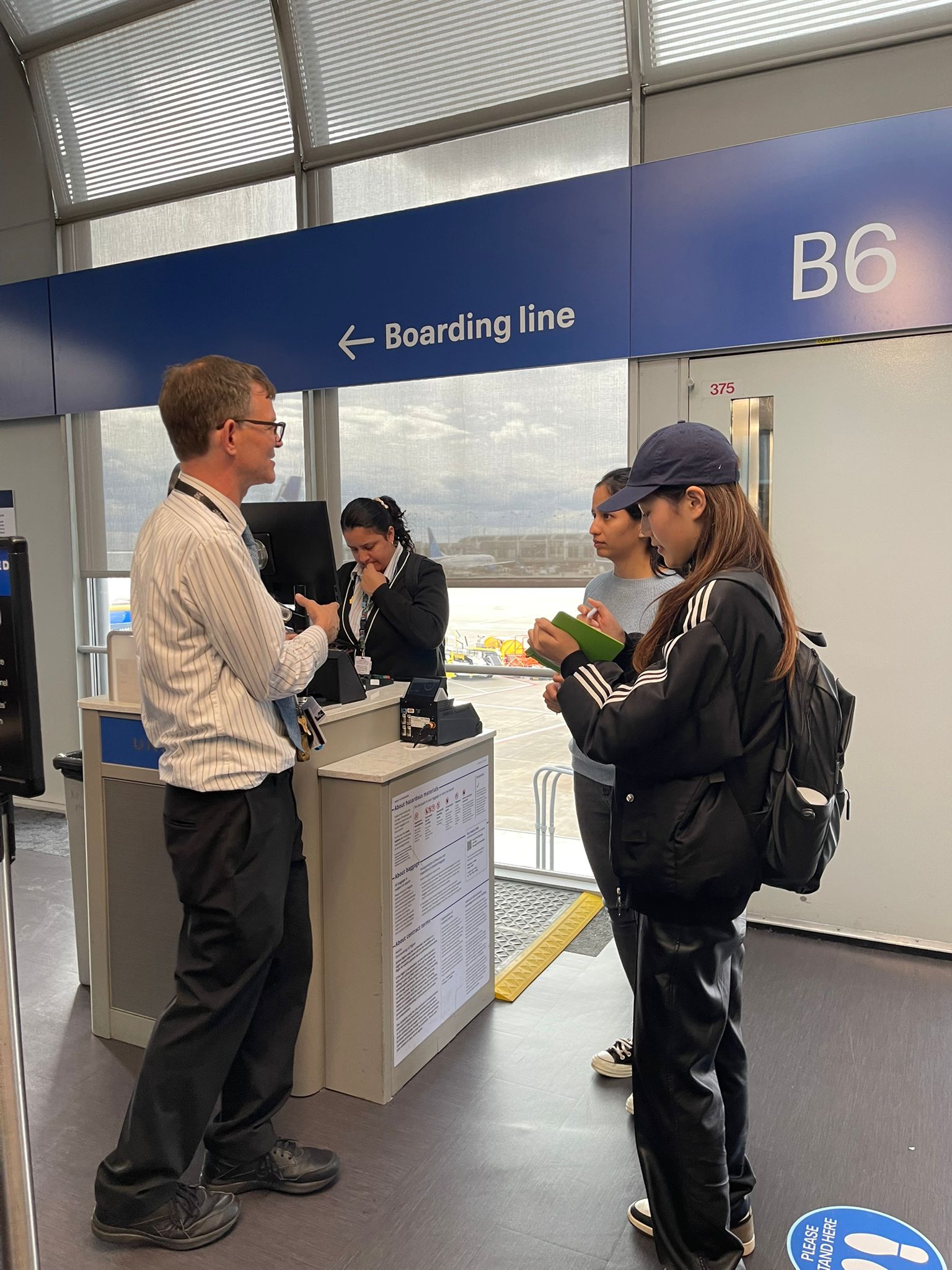
Simulation surfaced what worked operationally; usability testing helped us understand how passengers perceived and interacted with the concept.
The user testing revealed:
Participants immediately understood the value of a single group boarding pass
Opting in at the airport added cognitive load during an already stressful moment
The timing and placement of the opt-in mattered more than the toggle itself
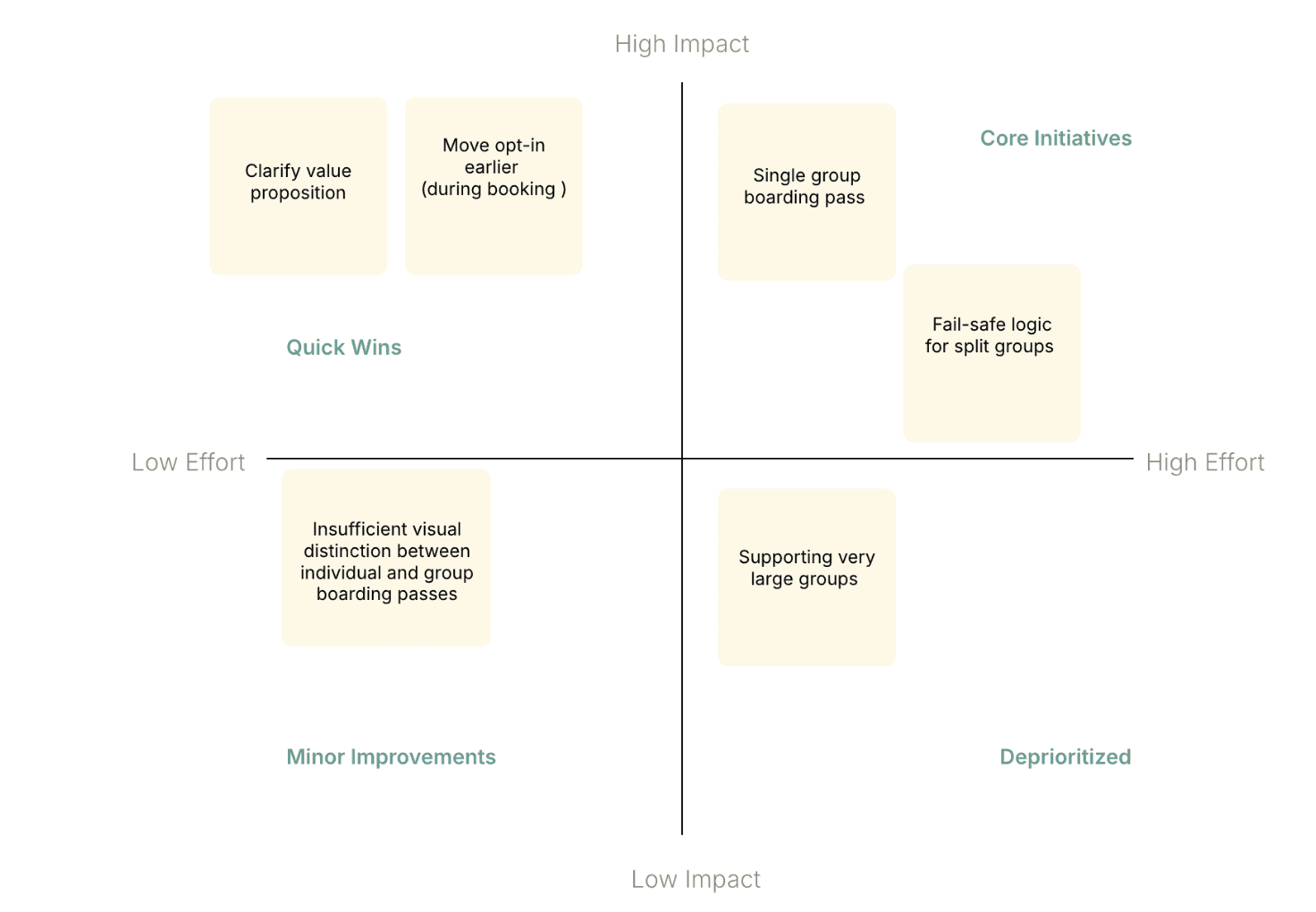
High Impact
High Effort
Low Effort
Low Impact
Supporting very large groups
Insufficient visual distinction between individual and group boarding passes
Single group boarding pass
Fail-safe logic for split groups
Clarify value proposition
Move opt-in earlier
(during booking )
Core Initiatives
Deprioritized
Minor Improvements
Quick Wins
“Its a nice to have for people traveling in groups, but its a necessity for families. I see the use case more for people with some level of familiarity with each other”
“ When it gets to the pop-up to opt in, that process isn’t so smooth. I didn’t know how to get there." “Also opting in at the airport seems like an extra step especially when you are constantly bombarded at the airport.”
“Also If I opt in, do I get something from it?”
Key Learnings
Here are some of key learnings from this project as this was a real fun and close to the actual project experience with united airlines team and project manager.
Conducting frequent testing and aligning early with engineering teams to understand limitations and possibilities for implementation
On-site research can help uncover major of underlying patterns or emotions
Brainstorming with participants and open discussions with putting down ideas can be helpful
Open to design conversations and new opportunities!
Exploring alternative concepts through rapid prototyping
By quickly bringing multiple ideas to life, we were able to compare and receive feedback from the united airlines teams , identify limitations, more scope, and validate assumptions.
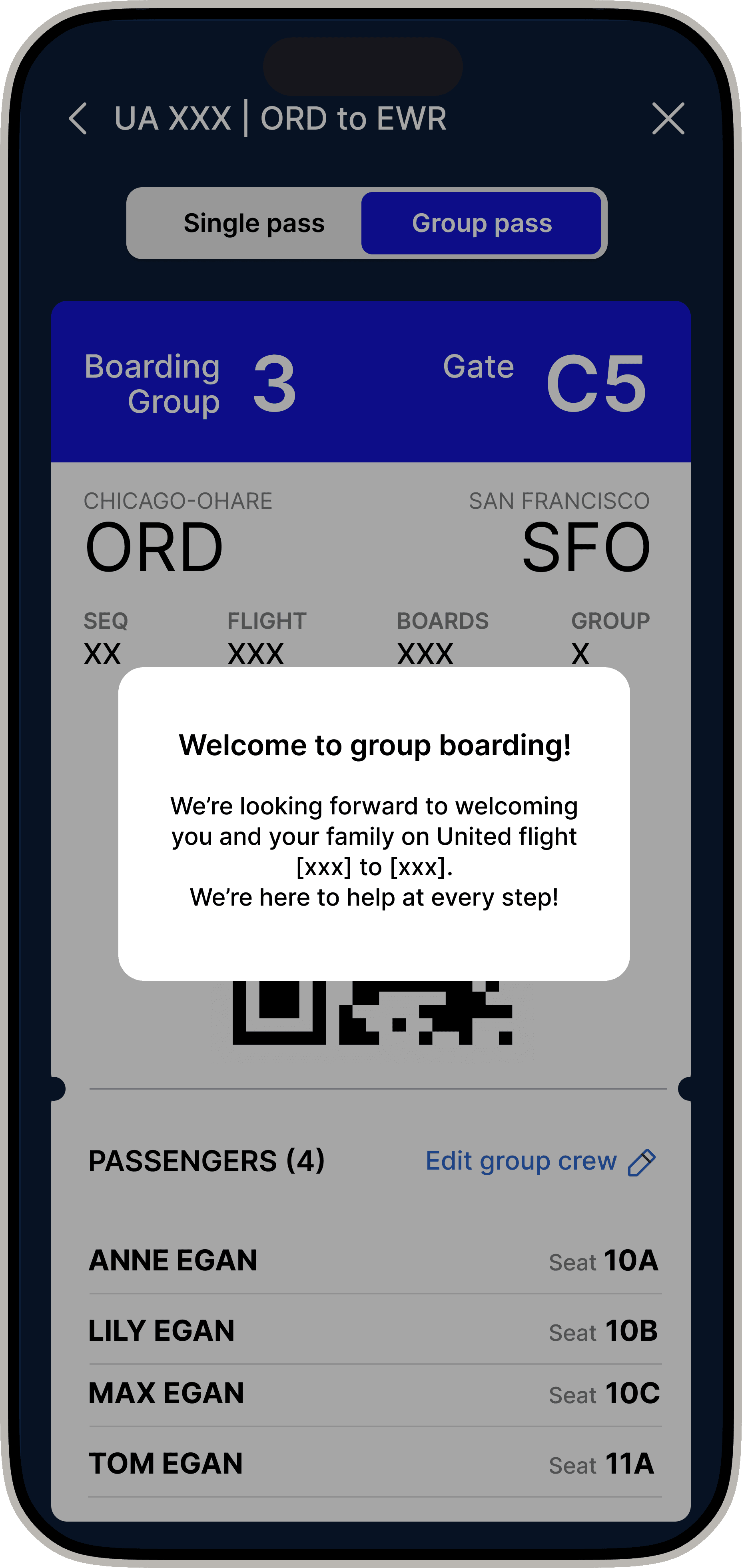
Simple opt-in for group boarding
One-tap toggle to stay together
All group members and seat details in one place

Parents with younger children


Adults traveling with elderly companions


Elderly Couples
Designing a smarter way to board together
Managing multiple boarding passes at the gate is chaotic, so we brought everyone under one.
A moment of clarity, built into every scan
Boarding as a group creates attentional overload for families and gate agents
Group boarding places high pressure on both families and gate agents simultaneously mapping both journeys revealed exactly where coordination breaks down.
Group boarding represents a missed opportunity to improve experiences at scale
Each year, millions of families and groups travel together, forming a major portion of United Airlines' customer base.
From January to August 2024 alone, United Airlines recorded over 20 million unique bookings, with 50% involving 2+ passengers, across both domestic (20%) and international (32%) routes
Research revealed three types of groups most impacted by group boarding complexity each managing dependents, reduced mobility, or both
Parents with younger children
Adults traveling with elderly companions
Elderly Couples
1.Edit group pass
2.Remove Person
3.Confirm the updated pass
4.Receive a group pass
Test A
Controlled test reflecting the current boarding process.
Test B
Solution test using the proposed single-group pass.
The user testing revealed:
Participants immediately understood the value of a single group boarding pass
Opting in at the airport added cognitive load during an already stressful moment
The timing and placement of the opt-in mattered more than the toggle itself
Designing a smarter way to board together
Managing multiple boarding passes at the gate is chaotic, so we brought everyone under one.
Simple opt-in for group boarding
One-tap toggle to stay together
All group members and seat details in one place
Designed to adapt when plans change
Not every group boarding goes as planned, and that's okay. Managing real-life changes like cancellations or no-shows is now fast, flexible, and fully user-led.
A moment of clarity, built into every scan
Intentional confirmation
Intentional confirmation
Encourages active passenger engagement
Exploring alternatives concepts through rapid prototyping
By quickly bringing multiple ideas to life, we were able to compare and receive feedback from the united airlines teams , identify limitations, more scope, and validate assumptions.
Concept 1 : Passenger Group Pass
Pro: New feature consolidates both boarding passes in one convenient location.
Con: Users need time to become familiar with the new functionality.
Concept 2 : Agent Scanner Designed for Group Boarding passes
Pro: Aligns with the immediate client priorities for operational improvement and requires minimal technical changes.
Con: Adds a manual check-off task for gate agents (secondary/front-stage stakeholders), increasing their workload, though it helps reduce errors, highlighting a trade-off between staff effort and improved operational reliability.
We moved forward with Concepts 1 and 2, as their scanning mechanisms offered practical, implementable foundations for future development. High-fidelity prototypes aligned with United Airlines’ design language and adhered to WCAG2 .1 AA accessibility standards to ensure inclusive experiences.
Usability issues stemmed from context rather than concept
We tested the single-group boarding pass concept through a comprehensive 45-minute simulation involving 18 participants, complemented by usability testing. Our mock airport environment allowed us to directly compare the existing process (Test A) with our proposed solution (Test B), measuring effectiveness, passenger behavior patterns, and optimal group size.
Operational Impact
Single group boarding passes reduced group boarding time by 46%.
Fail-Safe Approach
Group boarding requires a fallback when groups split unexpectedly.
Group Pass Limit
Boarding efficiency drops beyond a <5 group size.
Simulation surfaced what worked operationally; usability testing helped us understand how passengers perceived and interacted with the concept.
“Its a nice to have for people traveling in groups, but its a necessity for families. I see the use case more for people with some level of familiarity with each other”
“ When it gets to the pop-up to opt in, that process isn’t so smooth. I didn’t know how to get there." “Also opting in at the airport seems like an extra step especially when you are constantly bombarded at the airport.”
“Also If I opt in, do I get something from it?”
Key Learnings
Here are some of key learnings from this project as this was a real fun and close to the actual project experience with united airlines team and project manager.
Conducting frequent testing and aligning early with engineering teams to understand limitations and possibilities for implementation
On-site research can help uncover major of underlying patterns or emotions
Brainstorming with participants and open discussions with putting down ideas can be helpful
Open to design conversations and new opportunities!
Concept 3 : Flight visualization for better efficiency
Pro: Valuable for long-term transformation.
Con: Requires broader system changes and longer implementation timelines.